
Medically Reviewed By
Dr. Rabia Iqbal
Quick Snapshot
- Organism: Ganoderma lucidum (Reishi / Lingzhi)
- Key actives: Beta-glucan polysaccharides, ganoderic acids (triterpenoids), organic germanium, adenosine, LZ-8 protein
- DXN edge: Tissue culture cloning, six-phenotype blend, suspension cultivation, freeze-drying, fiber separation
- Primary uses: Immune modulation, hepatoprotection, cardiovascular support, sleep/anxiety relief, adjunct oncology support
- Important safety notes: Interacts with blood thinners; transplant patients & certain autoimmune conditions should exercise caution.
1. Introduction: The Mycological Renaissance and the DXN Paradigm
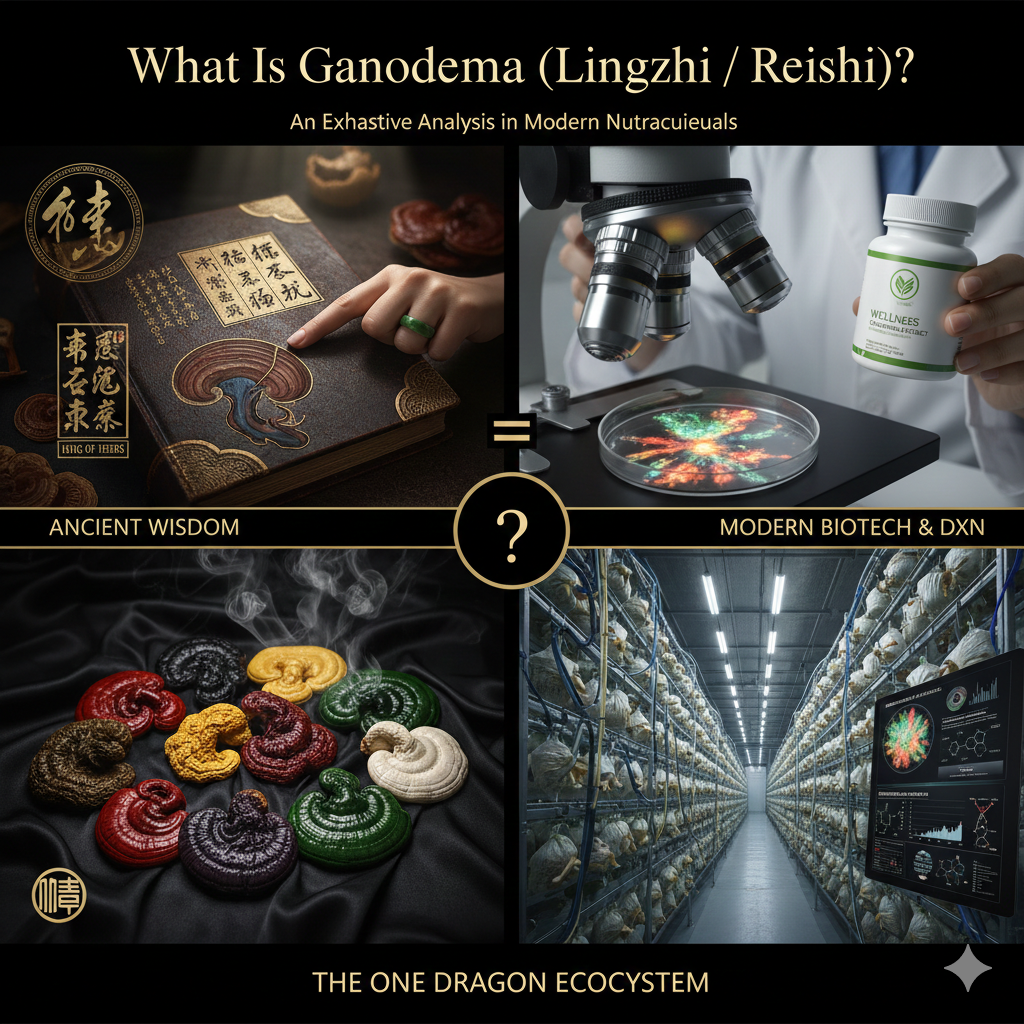
In the contemporary landscape of global health and nutrition, a movement away from reductionist synthetic compounds to complex whole-food functional agents is emerging. At the center stands Ganoderma lucidum — Lingzhi/Reishi — the “King of Herbs.” DXN’s “One Dragon” vertical integration (tissue culture → cultivation → processing → distribution) is a core case study in industrializing a rare medicinal fungus while preserving quality and traceability.
2. Botanical & Ethnobotanical Profile
- Taxonomy & morphology: Basidiomycete polypore with varnished cap; woody, corky fruit body; spore-bearing pores.
- Historical status: Placed in the “Superior” class of Shen Nong Ben Cao Jing; long associated with longevity.
- Six colors / phenotypes: Traditional six-color classification underlies DXN’s “6 Species” (phenotype) strategy; modern mycology suggests some are distinct species or phenotypes with differing phytochemical profiles.
- Ecology & scarcity: Rare in the wild; bioaccumulator risks make controlled cultivation important.
3. The Biochemical Matrix: Pharmacological Mechanisms
- Polysaccharides / β-glucans: Bind receptors (Dectin-1, CR3) on innate immune cells → immune priming, enhanced phagocytosis and cytokine modulation. DXN’s mycelial product (GL) is especially polysaccharide-rich.
- Triterpenoids (ganoderic acids): Bitter sterol-like compounds with hepatoprotective, antihistamine, ACE-inhibitory and hypolipidemic activities; concentrated in mature fruit body (RG).
- Organic germanium (Ge-132): Controversial; proposed to support oxygen utilization and vitality (higher in mycelium).
- Adenosine & nucleosides: Circulatory effects via mild anti-platelet action.
- LZ-8 protein: Immunomodulatory protein that may temper autoimmune overactivity while supporting immune competence.
4. DXN’s “One Dragon” Ecosystem
- Vertical integration & traceability: cultivates, processes, and distributes to prevent substrate contamination and ensure consistent strains.
- 6-phenotype blend: Selective breeding of phenotypes for complementary phytochemical profiles.
- Tissue culture cloning: Genetic uniformity for batch consistency.
- Suspension / bag cultivation: Substrate in sterilized bags hung in controlled sheds to avoid soil contamination.
- Processing: Cold treatment → fiber separation (concentration) → freeze-drying and micro-powdering to preserve heat-sensitive actives and increase bioavailability.
- MOG distinction: Separating mycelium from grain prevents high starch “mycelium on grain” products.
5. Comparative Analysis: Ganoderma vs. Multivitamins
- Reductionism vs. holism: Multivitamins = isolated nutrients; Ganoderma = whole-food matrix with entourage effects.
- Supplemental vs. adaptogenic: Multivitamins add nutrients; Ganoderma modulates physiology bi-directionally.
- Safety & bioavailability: Ganoderma’s organic matrix generally offers regulated absorption and lower toxicity risk relative to some high-dose synthetic vitamins.
6. Therapeutic Benefits & Clinical Insights
- Immunomodulation & oncology support: Polysaccharides improve NK cell activity, mitigate chemo/radiation side effects, and improve quality of life as adjunct therapy.
- Cardiovascular & metabolic: ACE-like inhibition, hypoglycemic and hypolipidemic effects reported in preclinical/clinical literature.
- Hepatoprotection: Elevates endogenous antioxidants (SOD, glutathione), protecting liver from toxins.
- Neuroprotection & mental wellness: Triterpenes exhibit sedative/anxiolytic effects and may support NGF synthesis when combined with complementary mushrooms.
7. Safety, Contraindications & Compliance
- Bleeding risk: Mild anticoagulant actions — avoid combining with prescription anticoagulants; stop 2 weeks prior to surgery.
- Transplants & immunosuppression: Avoid in transplant recipients (may counter immunosuppressants).
- Autoimmune conditions: Use cautiously and under supervision.
- Healing crisis / Herxheimer-type responses: Mild transient symptoms possible; manage by hydrating and adjusting dose.
- Regulatory compliance: Avoid disease-treatment claims; use allowed structure/function language and include FDA disclaimer where needed.
8. Market & Business Context
- Reishi market growing (multi-billion dollar); drivers include preventative health trends and functional foods. DXN’s MLM model supports consumer education and product penetration for a complex product.
Key Benefits
Immune Support & Immunomodulation
Polysaccharides (β-glucans) prime innate and adaptive immunity via Dectin-1 and CR3 receptor pathways, increasing NK cell activity and cytokine balance — useful as adjunct support during infection or oncology care (not a cure).
Cardiometabolic Support
Ganoderic acids and other triterpenes can act as ACE-like inhibitors, help reduce cholesterol synthesis, and polysaccharides may support blood sugar regulation — supporting healthy blood pressure, lipids, and glycemic control.
Liver Protection & Detoxification
Enhances endogenous antioxidants (SOD, glutathione) and reduces lipid peroxidation, supporting liver resilience against toxins and chemical stress.
Neuro-Cognitive & Sleep Benefits
Triterpenes exert sedative/anxiolytic effects that can improve sleep latency and quality; emerging evidence suggests neurotrophic support when combined with complementary fungi.
Whole-System Adaptogen: Homeostatic Regulation
Rather than simply adding a nutrient, Ganoderma modulates physiology (bi-directional adaptogenic action), supporting balance across immune, metabolic, and neuroendocrine systems.