
Medically Reviewed By
Dr. Rabia Iqbal
Quick Snapshot
- Bio-Active Profile: Terpinen-4-ol is the primary driver of TTO’s anti-inflammatory and antimicrobial efficacy; high-quality therapeutic oils must contain 30–48% of this compound.
- Eczema Management: TTO modulates the histamine-induced wheal and flare response and reduces Staphylococcus aureus colonization, which is a major driver of AD flares.
- Psoriasis Support: TTO acts as a keratolytic agent (scale remover) and may normalise keratinocyte proliferation in plaque psoriasis.
- Safety Critical: Oxidation of terpenes into ascaridole is the leading cause of sensitization. Freshness and proper storage in dark glass are non-negotiable for safety.
- Carrier Synergy: The choice of carrier oil (Jojoba for facial skin, Sunflower for barrier repair, or Coconut for thick plaques) significantly influences therapeutic outcomes.
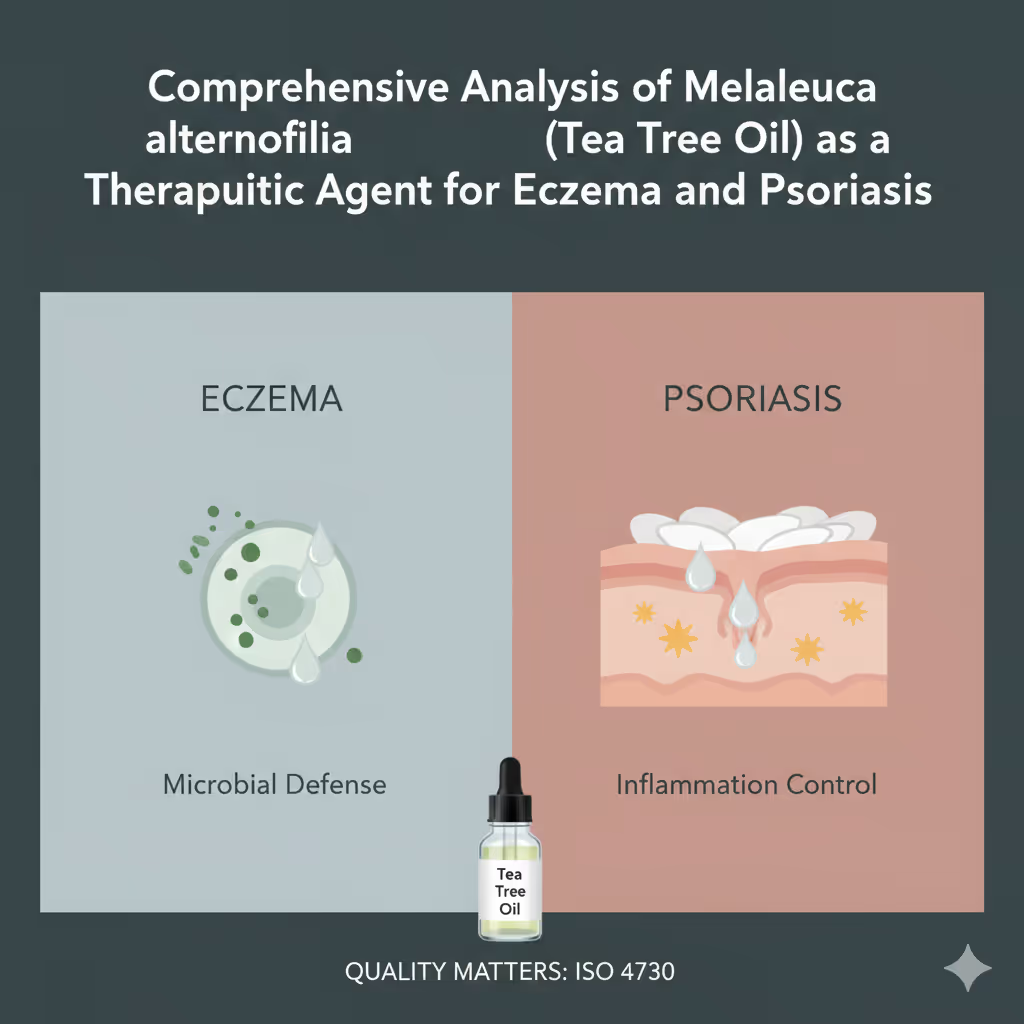
The Chemistry of Quality: ISO 4730 and Terpene Stability
The therapeutic window of TTO is inextricably linked to its chemical stability. The International Organization for Standardization (ISO 4730) defines the 'gold standard' for Melaleuca alternifolia. To be effective for chronic skin conditions, the oil must fall within specific ranges:
- Terpinen-4-ol (30% – 48%): The primary anti-inflammatory agent. It suppresses pro-inflammatory cytokines like TNF-α and IL-1β.
- 1,8-Cineole (Trace – 15%): While a penetration enhancer, high levels are irritating to eczema-prone skin. Therapeutic grade oils often aim for <5%.
- Para-Cymene: An indicator of oxidation. If levels exceed 6–8%, the oil has degraded and may cause allergic contact dermatitis.
Mechanisms of Action: The Membrane Partition Theory
TTO doesn't just 'kill' germs; it disrupts their very existence. Being lipophilic, the monoterpenes partition into the phospholipid bilayer of microbial cell membranes. This causes:
- Ion Leakage: Loss of vital potassium ($K^{+}$) ions.
- Respiratory Inhibition: Disruption of membrane-bound enzymes, effectively 'suffocating' pathogens like S. aureus.
- Immunomodulation: Beyond antimicrobial action, TTO reduces the edema (swelling) associated with itchy hives and eczematous lesions by modulating vascular responses.
Tea Tree Oil for Eczema (Atopic Dermatitis)
In Eczema, the skin barrier is 'leaky,' allowing Staphylococcus aureus to dominate the microbiome. TTO addresses this through:
- Microbial Diversity: By reducing S. aureus, TTO allows a more diverse, healthy microbiome to return.
- Flare Reduction: Clinical data shows TTO is more effective than Zinc Oxide in reducing redness and spreading (flare) in histamine models.
- Caution: For severe, 'weeping' eczema, TTO should be avoided or diluted below 2% as it can penetrate too deeply and cause sensitization.
Tea Tree Oil for Psoriasis: The Descaling Agent
Psoriasis is driven by the IL-23/IL-17 cytokine axis, leading to rapid keratinocyte division. TTO intervenes via:
- Keratolytic Action: TTO is a lipophilic solvent that dissolves sebum and loosens the 'oily scale' typical of scalp psoriasis.
- Anti-Proliferative Activity: Terpinen-4-ol may help normalize the cell cycle, thinning plaques over time.
- The 'DurrDerma' Evidence: Small-scale trials have shown an 83% success rate in reducing PASI scores (Psoriasis Area and Severity Index) when TTO is combined with other anti-inflammatories like Black Cumin and Cocoa Butter.
Safety and Toxicology: The Oxidation Hazard
The most significant risk with TTO is Allergic Contact Dermatitis (ACD). This is rarely caused by fresh oil but by oxidation products like ascaridole. When exposed to light, heat, and air, terpenes degrade into potent allergens. Always store TTO in amber glass and discard it if it smells like turpentine or paint thinner.
Key Benefits
Steroid-Sparing Potential
TTO can manage mild-to-moderate flares, potentially reducing the long-term reliance on topical corticosteroids and their associated side effects.
Broad-Spectrum Antimicrobial
Effectively targets S. aureus and Malassezia yeasts, preventing secondary infections that often exacerbate chronic eczema and psoriasis.
Superior Scalp Descaling
As a lipophilic solvent, TTO excels at loosening stubborn silvery scales in scalp psoriasis, improving the penetration of other topical treatments.
Natural Barrier Support
When diluted in linoleic-rich carrier oils like Sunflower, TTO helps repair the skin's lipid barrier while providing anti-inflammatory benefits.
Reduced Microbial Resistance
Unlike single-target synthetic antibiotics, TTO's multi-component mechanism makes it significantly harder for cutaneous pathogens to develop resistance.