
Medically Reviewed By
Dr. Rabia Iqbal
Quick Snapshot
- The Incretin Pathway: Fermented organic acids like acetate and propionate bind to FFAR2 receptors on gut L-cells, triggering the release of Glucagon-like Peptide-1 (GLP-1).
- Alpha-Glucosidase Inhibition: The acetic acid in DXN Vinaigrette slows the breakdown of complex starches into glucose, smoothing the insulin response.
- Enzymatic Hydrolysis: Anaerobic fermentation provides exogenous enzymes that reduce the 'metabolic cost' of digestion, signaling nutrient sufficiency to the brain.
- Prebiotic Synergy: Ganoderma lucidum polysaccharides foster SCFA-producing bacteria, creating a long-term, self-sustaining satiety loop.
- Phloridzin & SGLT1: Apple phenolics naturally inhibit the primary gut glucose transporter, mimicking the action of modern metabolic pharmaceuticals.
Part I: The Endocrine Mechanics of Satiety — Understanding GLP-1
To evaluate the efficacy of any 'Natural Ozempic' alternative, we must first understand the system it attempts to target: the incretin system. Glucagon-like Peptide-1 (GLP-1) is a peptide hormone secreted by enteroendocrine L-cells located in the distal ileum and colon. These cells act as the gut’s primary nutrient sensors.
Under normal conditions, when food reaches the lower intestine, L-cells release GLP-1, which triggers a cascade of metabolic benefits: it enhances insulin secretion, suppresses glucagon production in the liver, and slows gastric emptying. This 'gastric braking' keeps food in the stomach longer, prolonging the feeling of fullness. Most importantly, GLP-1 crosses the blood-brain barrier to signal the hypothalamus, reducing the psychological drive to eat—a phenomenon recently coined as 'food noise.' Pharmaceutical agonists achieve this by using synthetic analogues that resist degradation. A natural approach, however, focuses on maximizing the body's endogenous production using specific molecular ligands found in fermented foods.
Part II: The Fermentation Connection — SCFAs as Molecular Keys
The bridge between fermented foods and satiety hormones is built on Short-Chain Fatty Acids (SCFAs)—primarily acetate, propionate, and butyrate. These organic acids are the metabolic byproducts of fermentation, both in the fermenting jar and within your own colon.
[Image showing acetate binding to GPR43 receptors on L-cells]Research has identified specific G-protein-coupled receptors on L-cells, named FFAR2 (GPR43) and FFAR3 (GPR41). These are chemically tuned to detect SCFAs. When you consume a fermented functional food like DXN Vinaigrette, the high concentration of acetate binds to FFAR2, initiating an intracellular calcium cascade ($Ca^{2+}$) within the L-cell. This influx triggers the exocytosis of GLP-1 and PYY into the bloodstream. In essence, the organic acids produced during fermentation 'tell' your gut that a large, nutrient-dense meal has been consumed, even if the actual caloric intake was minimal.
Part III: DXN Vinaigrette — A Synergistic Metabolic Modulator
While many people use basic apple cider vinegar, the biochemical profile of DXN Vinaigrette is significantly more complex. It is a formulation of Red Rice Vinegar (fermented with Monascus purpureus) and Ganoderma lucidum extract. This combination addresses metabolic regulation through three distinct 'Natural Ozempic' pathways:
1. The Acetic Acid Digestion Brake
Acetic acid acts as a competitive inhibitor of alpha-glucosidase, the enzyme in the small intestine responsible for breaking down complex starches into simple glucose. By slowing this enzyme, the vinaigrette effectively lowers the Glycemic Index (GI) of any carbohydrate-rich meal. This prevents the rapid insulin spike and the subsequent 'hypoglycemic crash' that usually triggers rebound hunger and cravings two hours later.
2. Ganoderma and Hypothalamic Inflammation
Obesity is often characterized by Leptin Resistance, where the brain becomes 'deaf' to the satiety signals from fat cells. This is usually caused by neuroinflammation in the hypothalamus. The triterpenes in Ganoderma lucidum are potent anti-inflammatory agents that help reduce this neuroinflammation, potentially 're-sensitizing' the brain to natural leptin and GLP-1 signals.
3. Prebiotic Microbiome Remodeling
Ganoderma polysaccharides act as prebiotics that foster the growth of Akkermansia muciniphila and Faecalibacterium prausnitzii. These bacterial strains are the body's primary butyrate producers. By remodeling the microbiome, DXN Vinaigrette creates a sustained loop of GLP-1 stimulation that persists long after the initial dose has been digested.
Part IV: DXN Apple Enzyme — The Enzymatic Satiety Primer
If vinegar is the 'brake,' the Apple Enzyme Drink is the 'primer.' This functional beverage utilizes a specialized anaerobic fermentation process that preserves high concentrations of phloridzin, a unique apple polyphenol.
Phloridzin is a natural inhibitor of SGLT1 (Sodium-Glucose Linked Transporter 1) in the intestinal brush border. SGLT1 is the primary vehicle that carries glucose from your gut into your blood. By inhibiting this transporter, the Apple Enzyme Drink reduces the total amount of glucose absorbed from a meal. Furthermore, the 'Enzyme Theory' of satiety suggests that the brain monitors the availability of digestive enzymes; when exogenous enzymes are provided, the body signals nutrient sufficiency faster, leading to smaller portion sizes and reduced 'food noise.'
Part V: The 'Food Noise' and the Vagus Nerve
One of the most profound effects of GLP-1 agonists is the cessation of intrusive thoughts about food. Fermented foods achieve a similar, though milder, effect via the Vagus Nerve. SCFAs produced by the fermentation of DXN products stimulate the vagal afferent fibers in the gut lining. These fibers send a direct 'satiety pulse' to the Nucleus Tractus Solitarius (NTS) in the brainstem, bypassing the bloodstream entirely. This 'gut-brain express' is the reason many users report that a small dose of DXN Vinaigrette in the afternoon kills the urge for a sugary snack within minutes.
Part VI: The Strategic Metabolic Reset Protocol
To experience the 'Natural Ozempic' effect, timing is more important than volume. The following protocol is designed to layer the biological mechanisms for maximum appetite suppression:
- Morning (Empty Stomach): 1 sachet of DXN Apple Enzyme Drink in 200ml water. This primes the SGLT1 inhibitors and sets a stable metabolic tone.
- 15 Minutes Before Meals: 1 tablespoon of DXN Vinaigrette in 300ml of water. This activates the 'acetic acid brake' and triggers L-cell GLP-1 release just as you begin eating.
- The 3 PM 'Food Noise' Buffer: A 'Metabolic Mocktail' of 15ml Vinaigrette and 50ml Apple Enzyme in sparkling water. This utilizes the vagal nerve pathway to prevent late-day cravings.
Part VII: Safety, Expectations, and E-E-A-T
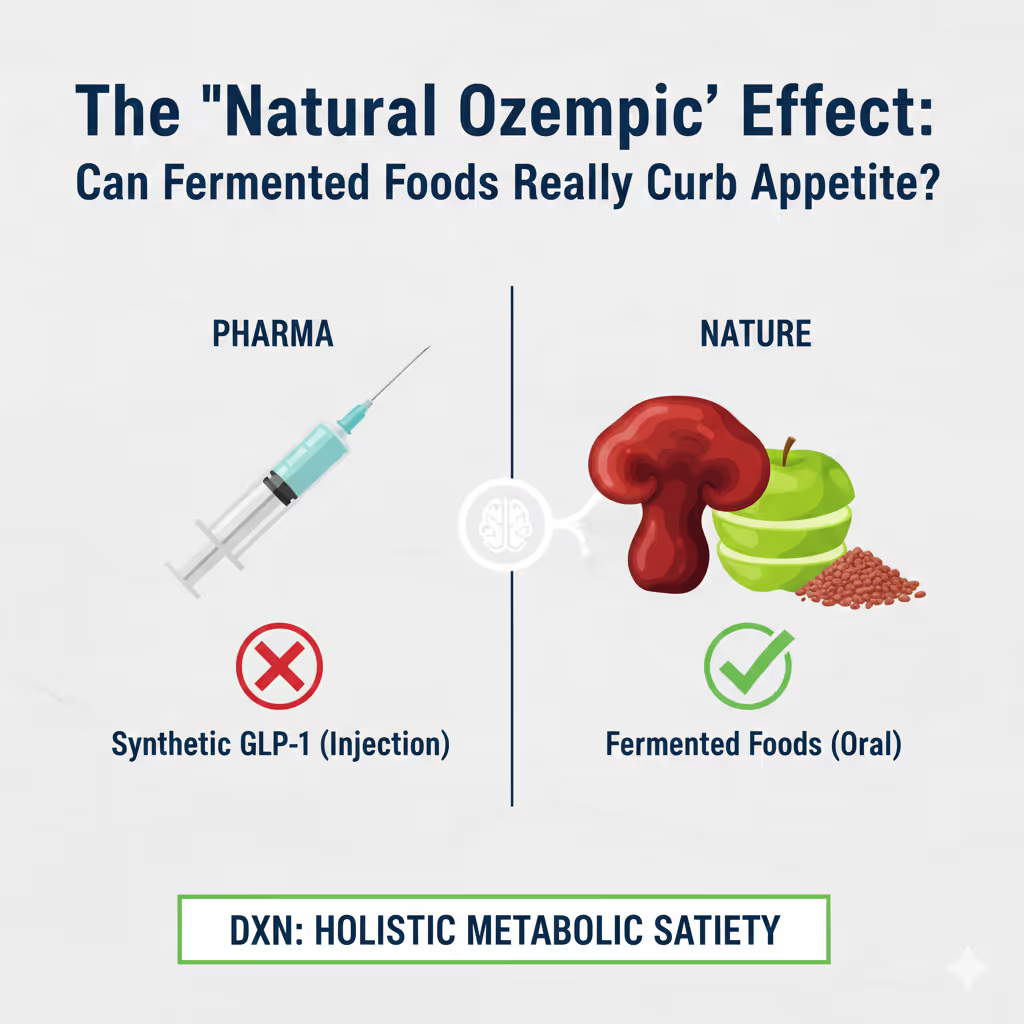
It is critical to distinguish between pharmaceutical and nutraceutical approaches. Pharmaceuticals like Semaglutide deliver a supraphysiological dose of a synthetic hormone with a long half-life. DXN functional foods trigger a physiological, transient release of your own natural hormones. While the results are more subtle, they are sustainable and lack the common side effects of 'Ozempic face' or severe gastroparesis. However, those on statins or blood-sugar-lowering medications must consult their physician, as Red Rice Vinegar contains natural Monacolin K which can potentiate these drugs.
Key Benefits
Endogenous GLP-1 Boost
Triggers the natural release of satiety hormones by binding acetate to the FFAR2 receptors on your gut L-cells.
Reduced 'Food Noise'
Signals the hypothalamus via the vagus nerve, helping to quiet intrusive thoughts and cravings for processed sugars.
Starch Digestion Control
Inhibits alpha-glucosidase, slowing down the conversion of carbohydrates into blood sugar to prevent energy crashes.
Glucose Absorption Block
Utilizes apple phloridzin to inhibit SGLT1 transporters, naturally limiting the amount of glucose that enters the bloodstream.
Microbiome Leanness
Fosters the growth of leanness-associated bacteria through the prebiotic action of Ganoderma polysaccharides.