
Medically Reviewed By
Dr. Rabia Iqbal
Quick Snapshot
- The Visceral Trap: Unlike subcutaneous fat, visceral fat (belly fat) is an active endocrine organ rich in glucocorticoid receptors, making it uniquely sensitive to stress.
- The Enzyme Factory: Visceral fat cells contain high levels of 11β-HSD1, an enzyme that regenerates active cortisol from inactive cortisone, creating a localized 'stress loop' in the abdomen.
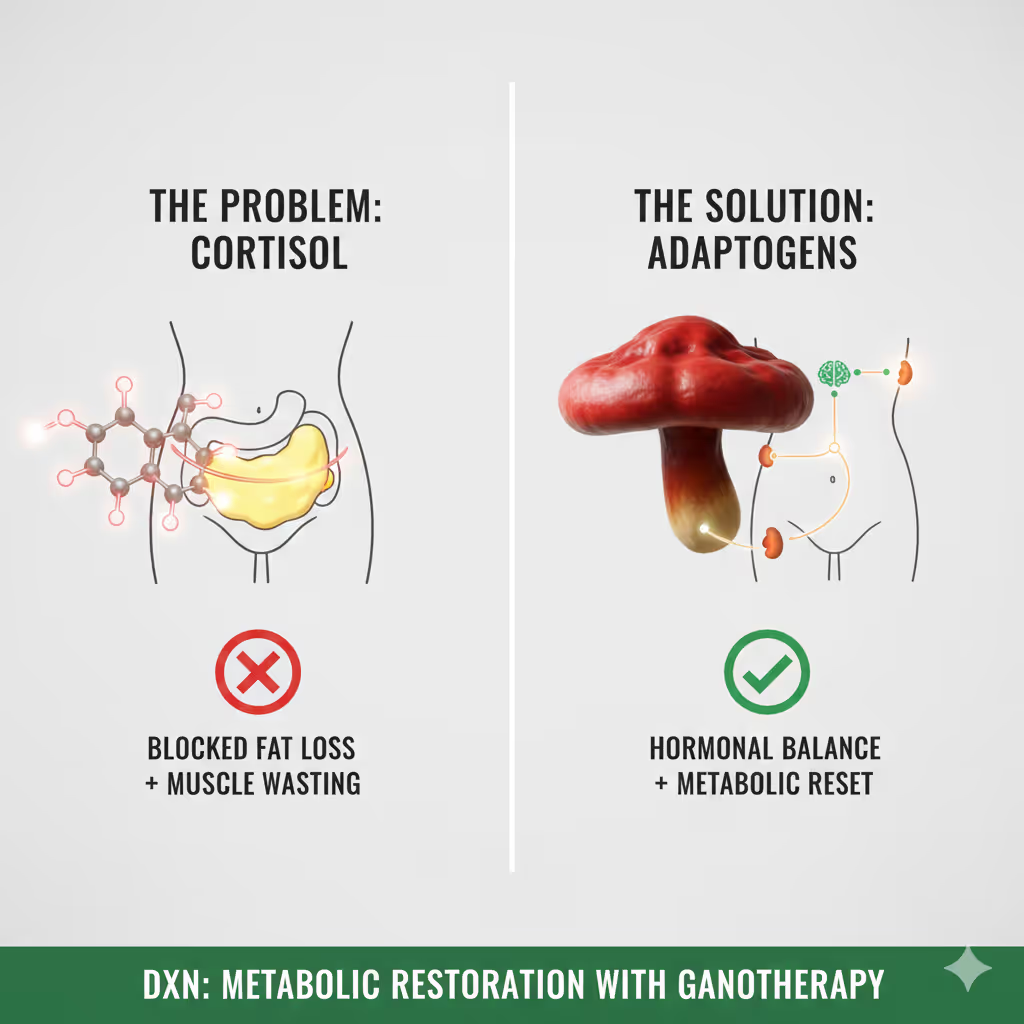
- Metabolic Blockage: High cortisol triggers Gluconeogenesis (breaking down muscle for sugar) and inhibits Hormone-Sensitive Lipase, physically blocking fat burning.
- Ganoderma Solution: Triterpenes in DXN Reishi Gano (RG) mimic steroid structures to modulate the HPA axis, while Ganocelium (GL) enhances cellular oxygenation to combat metabolic stagnation.
- Anabolic Protection: DXN Spirulina provides the necessary amino acids to prevent cortisol-induced muscle wasting (sarcopenia), preserving the Basal Metabolic Rate (BMR).
The Evolutionary Mismatch: From Tiger to Traffic
To understand the pathology of cortisol belly, we must first understand the design of the stress response. When the hypothalamus detects a threat, it releases Corticotropin-Releasing Hormone (CRH), triggering a cascade that ends with the adrenal glands pumping out cortisol. In the paleolithic era, this mobilized energy to run from a tiger. Today, this same cascade is triggered by traffic, emails, and financial worry.
[Image of HPA axis signaling pathway]Because we do not physically run away from these modern stressors, the mobilized glucose is not burned. Instead, under the influence of insulin, it is redeposited as fat. Crucially, it is deposited viscerally (deep in the abdomen) because visceral fat cells have a higher density of glucocorticoid receptors than subcutaneous fat cells. The body is effectively packing energy into the most accessible storage unit for the next 'emergency.'
The Biochemistry of the Blockage
Cortisol blocks weight loss through two primary enzymatic pathways that effectively fundamentally alter your metabolism:
1. Hepatic Gluconeogenesis (The Sugar Flood)
Cortisol is catabolic. It tells the liver to produce new glucose from non-carbohydrate sources (amino acids from muscle). It upregulates the enzyme Phosphoenolpyruvate Carboxykinase (PEPCK). This floods the blood with sugar even if you haven't eaten, leading to a secondary spike in insulin.
[Image of gluconeogenesis pathway in liver]2. Lipolysis Inhibition (The Fat Lock)
While cortisol mobilizes energy, the resulting high insulin levels inhibit Hormone-Sensitive Lipase (HSL). HSL is the enzyme required to break down triglycerides into burnable fatty acids. High Cortisol + High Insulin = HSL Deactivation. You physically cannot access your fat stores.
The Local Factory: 11β-HSD1
Perhaps the most insidious mechanism is the enzyme 11β-Hydroxysteroid Dehydrogenase Type 1 (11β-HSD1). This enzyme resides inside visceral fat cells. Its job is to convert inactive cortisone back into active cortisol.
This means your belly fat is capable of generating its own stress hormones, independent of the adrenal glands. This creates a 'Cushingoid' environment locally in the abdomen, explaining why you can have normal blood cortisol tests but still suffer from cortisol-induced obesity. Inhibiting 11β-HSD1 is a primary therapeutic target for reversing abdominal obesity.
Ganoderma Lucidum: The Pharmacological Solution
Standard weight loss supplements (caffeine, fat burners) often worsen the problem by stimulating the adrenals. The solution requires Adaptogens—substances that modulate the HPA axis.
DXN Reishi Gano (RG): The Hormonal Modulator
RG is harvested at 90 days when triterpene content is highest. Triterpenes (Ganoderic Acids) share a structural similarity to steroid hormones. They act as competitive inhibitors, potentially dampening the over-activation of cortisol receptors and inhibiting 11β-HSD1 activity in the fat tissue.
DXN Ganocelium (GL): The Cellular Oxygenator
Harvested at 14 days, GL is rich in organic germanium and polysaccharides. By increasing the oxygen-carrying capacity of red blood cells, GL combats the metabolic stagnation and fatigue that often accompanies chronic stress (adrenal fatigue).
The Anabolic Shield: DXN Spirulina
Because cortisol is catabolic, it 'eats' muscle tissue to make glucose. This lowers your Basal Metabolic Rate (BMR), making future weight gain inevitable. DXN Spirulina acts as an anabolic shield.
With over 60% bioavailable protein and a full spectrum of B-vitamins, Spirulina provides the raw materials to preserve lean muscle mass. Furthermore, its alkaline nature helps neutralize the acidic byproducts of a stress-heavy metabolism.
Lifestyle Protocol: Resetting the HPA Axis
To reverse cortisol belly, you must stop 'running from the tiger' metabolically.
- Stop HIIT, Start Zone 2: High-Intensity Interval Training spikes cortisol. Switch to Zone 2 cardio (brisk walking) which burns fat without triggering the HPA axis.
- The 3-2-1 Sleep Rule: Poor sleep elevates next-day cortisol. Stop eating 3 hours before bed, stop work 2 hours before bed, and stop screens 1 hour before bed.
- Chrono-Nutrition: Eat protein within 30 minutes of waking to stabilize the morning cortisol awakening response (CAR) and prevent evening cravings.
Key Benefits
Modulates HPA Axis
Ganoderic acids in RG act as adaptogens, dampening the excessive release of cortisol from the adrenal glands during stress.
Inhibits Local Cortisol
Bioactive compounds in Ganoderma target the 11β-HSD1 enzyme, stopping visceral fat cells from generating their own stress hormones.
Preserves Metabolic Rate
Spirulina provides essential amino acids to counteract cortisol-driven muscle wasting, protecting your Basal Metabolic Rate (BMR).
Improves Sleep Architecture
Clinical studies show Ganoderma improves sleep latency and quality, which is the single most effective way to lower systemic cortisol.
Reduces Inflammation
By lowering CRP and IL-6 cytokines, the protocol stops the inflammatory feedback loop that drives insulin resistance.