Medically Reviewed By
Dr. Rabia Iqbal
Quick Snapshot
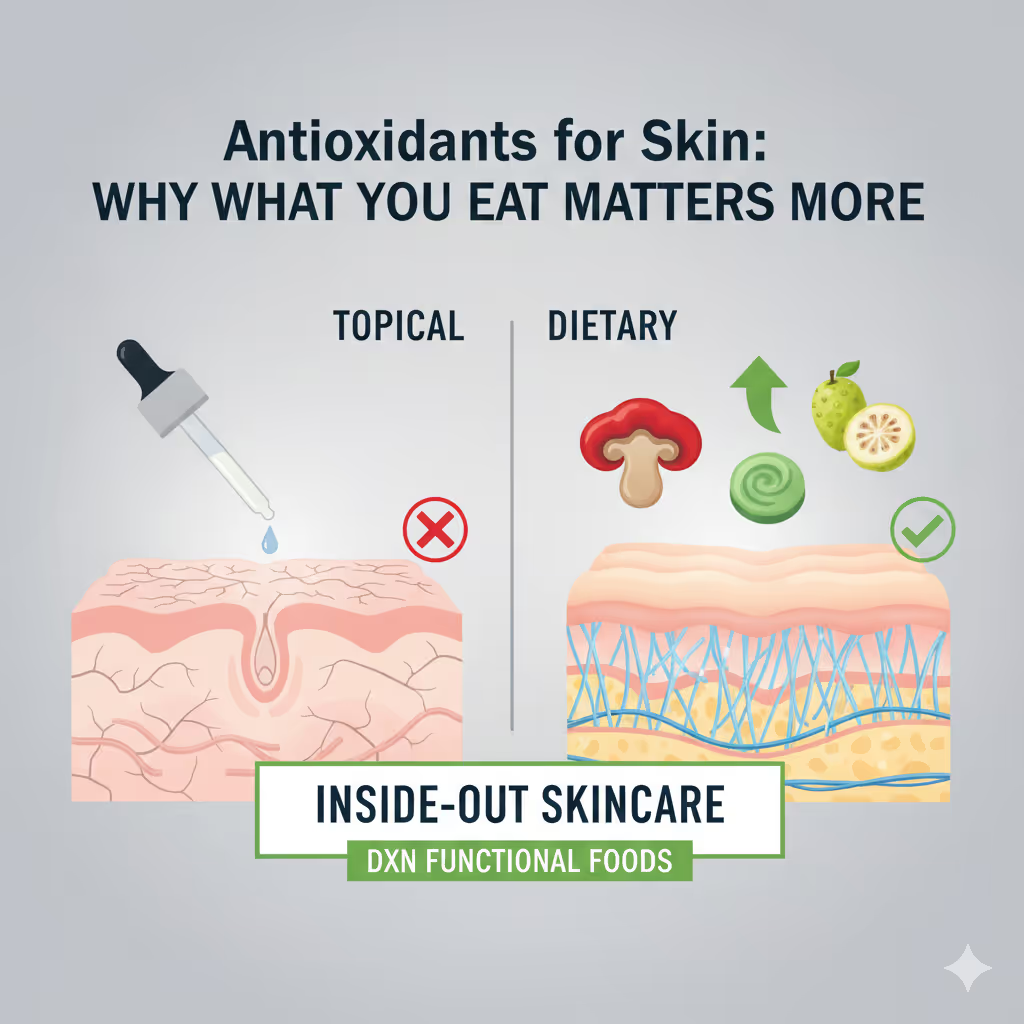
- The 500 Dalton Rule: Most topical antioxidants are too large to penetrate the stratum corneum, remaining on the surface where they oxidize rapidly.
- Systemic Photoprotection: Dietary antioxidants like Carotenoids and Vitamin C are actively transported via the blood to the dermis, increasing the skin's Minimal Erythema Dose (MED) or resistance to sunburn.
- Ganoderma's Role: Triterpenes in Reishi mimic steroid hormones to inhibit NF-kB (inflammation) and MMP-1 (collagen destruction) at a cellular level.
- Spirulina's Barrier Repair: Rich in GLA (Gamma-Linolenic Acid), Spirulina provides the raw lipids necessary to maintain the skin's moisture barrier and prevent Transepidermal Water Loss (TEWL).
- The inside-Out Protocol: A specific regimen of Roselle (Vit C), Spirulina (Amino Acids), and Ganoderma (Detox) creates a synergistic effect superior to topical serums.
The Physiological Barrier: Why Topical Delivery is Limited
To understand the superiority of dietary antioxidants, one must first appreciate the formidable engineering of the human skin. The skin is designed as a barrier system, evolved to prevent ingress. This evolutionary imperative makes it an exceptionally difficult route for nutrient delivery.
The Anatomy of the Barrier: The Stratum Corneum
The outermost layer, the stratum corneum (SC), acts as the gatekeeper. It follows the 'brick and mortar' model, where dead corneocytes are the bricks and a lipid matrix is the mortar.
The 500 Dalton Rule is a defining principle in dermatology: molecules heavier than 500 Daltons cannot freely penetrate healthy skin. This excludes many potent enzymes like Superoxide Dismutase (SOD), which remain on the surface when applied topically.
The Stability Paradox
Even small molecules like Vitamin C (L-ascorbic acid) face challenges. It is hydrophilic (water-loving) while the skin barrier is lipophilic (fat-loving), causing natural repulsion. Furthermore, topical Vitamin C oxidizes rapidly upon exposure to air, often turning into a pro-oxidant before it can be absorbed.
The Biochemistry of Aging: Oxidative Stress
Aging is driven by Reactive Oxygen Species (ROS). These unstable molecules attack lipids and proteins in a process called oxidative stress.
- Lipid Peroxidation: ROS attack cell membranes, leading to a loss of barrier function and increased dehydration.
- MMP Activation: ROS trigger the release of Matrix Metalloproteinases (MMPs), enzymes that 'digest' your existing collagen, leading to wrinkles.
- Inflammation (NF-kB): Oxidative stress activates the NF-kB pathway, causing chronic, low-grade inflammation or 'inflammaging.'
Dietary Antioxidants: The Systemic Solution
Unlike topicals, dietary antioxidants utilize the cardiovascular system to deliver nutrients to the dermis via the cutaneous microvasculature. This is Systemic Photoprotection.
Active Transport Mechanisms
The body possesses specific transporters, such as the Sodium-Dependent Vitamin C Transporters (SVCT1/2), which actively pump Vitamin C from the blood into skin cells against a concentration gradient. This ensures the machinery for collagen synthesis has the necessary cofactors, a process passive topical diffusion cannot replicate.
DXN Functional Ecosystem: Bioactive Dermatology
We can now analyze specific functional foods through a dermatological lens.
Ganoderma lucidum: The Systemic Regulator
Reishi affects skin health via two primary compounds:
- Triterpenoids: These mimic steroid hormones, inhibiting histamine release and downregulating pro-inflammatory cytokines. This addresses the root cause of acne and redness. Crucially, they inhibit MMP-1, preventing the breakdown of collagen.
- Polysaccharides: These sugars scavenge free radicals and protect dermal fibroblasts (collagen factories) from oxidative death.
Spirulina: The Barrier Builder
Spirulina provides Gamma-Linolenic Acid (GLA), a rare Omega-6 fatty acid essential for the skin's lipid matrix. GLA deficiency is linked to eczema and dry skin. By supplementing internally, you rebuild the 'mortar' of the skin barrier.
Morinzhi (Noni): The Enzymatic Activator
Rich in proxeronine, Noni juice is believed to help reactivate damaged enzymes. In vitro studies show Noni extracts can upregulate Type I Procollagen genes, directly stimulating tissue repair.
Comparative Analysis: Diet vs. Topical
Clinical data confirms that while topicals treat the surface, diet treats the structure.
- Photoprotection: Dietary carotenoids increase the Minimal Erythema Dose (MED), acting as an internal sunscreen that doesn't wash off.
- Duration: Topical effects last hours; dietary loading builds a tissue reservoir that protects 24/7.
Integrated Protocols: The DXN Regimen
Protocol A: Anti-Aging Structure
Objective: Maximize collagen synthesis.
Morning: 10 tablets DXN Spirulina (Amino acids) + Roselle Juice (Vitamin C).
Evening: DXN Reishi Gano (RG) to inhibit MMPs during the night repair cycle.
Protocol B: Clear Skin Detox
Objective: Reduce NF-kB inflammation.
Morning: DXN Ganocelium (GL) for immune modulation.
Mid-Day: Lion's Mane to manage stress-induced cortisol spikes that trigger breakouts.
Key Benefits
Bypasses Skin Barrier
Dietary antioxidants are delivered via the bloodstream to the deep dermis, bypassing the 500 Dalton molecular weight limit that blocks most topical creams.
Systemic Photoprotection
Consuming carotenoids and polyphenols increases the skin's intrinsic resistance to UV damage (MED), acting as an 'internal sunscreen' that never washes off.
MMP Inhibition
Ganoderma triterpenes actively inhibit Matrix Metalloproteinases, the enzymes responsible for breaking down collagen fibers after sun exposure.
Lipid Barrier Repair
Spirulina provides Gamma-Linolenic Acid (GLA), an essential fatty acid that strengthens the stratum corneum and prevents moisture loss (TEWL).
Collagen Cofactors
Systemic delivery ensures high concentrations of Vitamin C and Copper reach the fibroblasts, which are required for the enzymatic cross-linking of stable collagen.